
Since 1966, Best Cutting Die has been an established expert in nonwoven converting tools, including cutting dies, embossers, crimpers and ultrasonic rolls. We design and manufacture durable components for the nonwoven industry with the reliability to provide a long service life and consistency with every pass.
Nonwoven cutting dies cut the material into a specific width or imprint a shape to prepare it for further production to create the final product. A rotary cutting die automatically cuts several layers of thin or thick nonwoven substrates. Nonwoven rotary dies may also have a shape or pattern that they press or punch into the material.
Our precision rotary cutting dies for hygiene and personal care make prepping nonwoven materials automated and precise. The long, sharp blades on the die are effective at cutting through the material’s various layers, and the die design imprints the functional or aesthetic pattern across the material. We will work with you to design custom cutting dies that will be effective for your material and determine the best cutting method and parameters, like blade depth and speed.
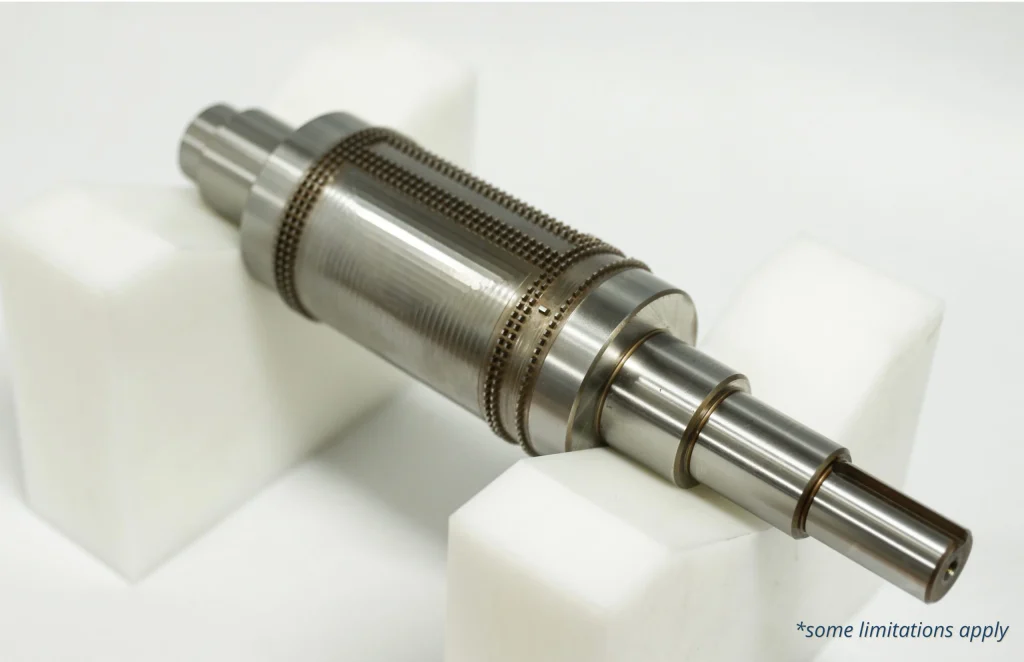
Embossing creates a raised image on the material using a rotary embossing machine and cylindrical dies. As the nonwoven moves through the machine, the die imprints the design. Embossing adds functional textures based on the product’s end use.
Our rotary embossing cylinders for nonwovens create unique designs on your items to improve visual appeal, showcase branding, detail important information and more. We offer spot embossers and large-scale, high‑performance embossing rolls for nonwoven materials.
Crimpers process and modify staple fibers — the short fibers in nonwoven materials. These tools crimp nonwovens by creating a wave effect on the material, resulting in enhanced quality and functionality compared to standard nonwovens. Crimped nonwovens have better bulk, resiliency, insulation, texture and absorbency, ideal for apparel, bedding and medical textiles like filters, diapers and wipes.
Our crimping and bonding solutions for nonwoven hygiene products enable your converting operations to be more efficient and high-speed, able to process high volumes of fibers in less time. In addition to high production capabilities, our products provide consistent crimping on nonwoven fibers to minimize defects and variations.
Because these dies consist of thin metal sheets, they are less expensive to produce than solid metal drums, which can lower your overall project costs.
Our flexible dies can cut a wide assortment of challenging materials, such as nonwovens, foil and paper.
Adding the chrome plating makes these durable dies even stronger and maximizes their long-term performance.
Flexible rotary dies are relatively small and consume minimal floor space in your facility. You’ll have more room to store finished goods, materials, equipment and other essentials.
We offer quick turnaround times on all flexible die projects, allowing you to maintain tight production schedules and meet customer demands.

At Best Cutting Die, we make converting to flexible dies even more convenient by providing customers with accurate design mock-ups and quotes within minutes.
Ultrasonic bonding uses high-frequency sound to create heat and vibration. When used for nonwoven materials, the thermoplastic fibers will bond together. Compared to other adhesive and thermal technologies, ultrasonic bonding rolls for hygiene products achieve the same effect without additives, making the nonwoven feel lightweight, soft, thin and flexible.
Our ultrasonic bonding rolls make the process of bonding nonwoven materials faster and more efficient, supporting high-speed production while creating less waste. The bonding effect is consistent and repeatable with every run, so you can yield quality results with little to no variations.
Our high-caliber flexible dies are ideal for envelope converting applications because they work with numerous envelope machines — including all F.L. Smithe and W&D models.
CNC-sharpened flexible dies produce accurate labels every time, so you can speed up your operations and improve your company’s productivity.
Our flexible dies feature optional chrome plating for increased strength and durability. The plating extends the die’s life span and is essential when cutting nonwoven items and other hard-to-cut materials.
Custom-made flexible dies from Best Cutting Die provide packaging manufacturers with maximum performance and reliable results when cutting any material.
Best Cutting Die has decades of experience with cutting dies, embossers, crimpers and ultrasonic bonding rolls and has the solutions you need to enhance your nonwovens. When you partner with us, you’ll benefit from our:
Best Cutting Die creates custom tooling for nonwoven converting to improve efficiency and reliability in your operations. Contact our team online or call 847-649-6549 to learn more about our capabilities or request a quote.
Flexible dies are thin, precision-cut tools used for cutting, creasing, and shaping materials in the envelope converting process. They are favored for their ability to hold tight tolerances, versatility in cutting various substrates, and ease of storage due to their lightweight nature.
Flexible dies are generally more cost-effective and quicker to manufacture than solid dies. They offer faster changeovers, which can significantly reduce production downtime and increase overall productivity.
Proper maintenance of flexible dies includes regular inspection, cleaning to remove adhesive buildup. Many flexible dies come with special coatings to enhance durability and reduce maintenance frequency.
Yes, flexible dies can be customized to fit specific envelope converting machines. It is essential to provide precise machine specifications and material details to the die manufacturer to ensure optimal performance and compatibility.
Common issues include adhesive buildup on the die, improper alignment, and wear and tear. These can be resolved by using adhesive-repellent coatings, ensuring accurate setup and alignment during installation, and regular maintenance.
Flexible dies provide precise cuts and consistent quality, essential for high-volume production. Their ability to handle intricate designs and maintain tight tolerances ensures that the final product meets high-quality standards.
Many manufacturers offer field training and support to ensure proper setup, maintenance, and troubleshooting of flexible dies. This training helps maximize productivity and efficiency while reducing the likelihood of production issues.