
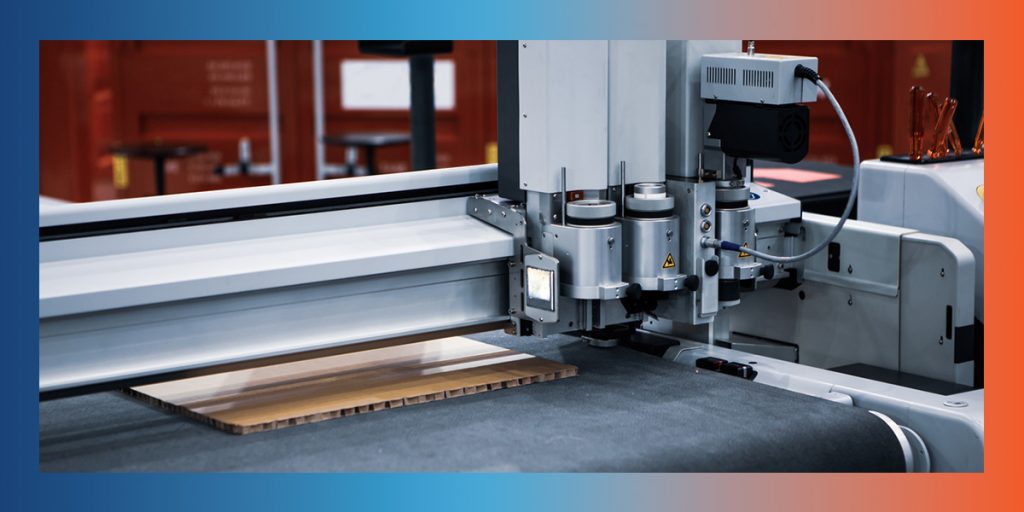
When converters need precision, speed and repeatability at scale, rotary die-cutting is often the process of choice. From labels and tapes to gaskets, films, foams and multi-layer laminates, rotary die-cutting supports high-volume production while maintaining tight tolerances and consistent results.
In this guide, we’ll break down what rotary die-cutting is, how the rotary die-cutting process works, when it’s the right solution compared to other converting methods and how the right tooling partner makes all the difference.
At Best Cutting Die, we deliver high-quality cutting dies, cutting modules and rotary die-cutting services for the converting industry.
Rotary die-cutting is a continuous converting process that uses a rotary cutting die mounted on a rotating cylindrical system to cut, score, perforate or emboss materials as they move through a press. Unlike flatbed die-cutting, which operates in a start-and-stop motion, rotary die-cutting runs continuously, making it ideal for long production runs and tight registration requirements.
This process is widely used in the converting industry to process thin, flexible materials such as:
Because the die rotates in sync with the web, converters achieve repeatable accuracy, clean edges and consistent cut quality across thousands — or millions—of impressions.
The rotary die-cutting process relies on precision-engineered tooling and carefully controlled press conditions. Here’s a simplified breakdown:
This continuous motion enables high speeds, tight tolerances and excellent registration — key advantages for converters balancing productivity and quality.
While presses vary, the success of any rotary die-cutting machine depends heavily on the quality of its tooling. Precision dies are tools, and their design directly impacts cut quality, tool lifespan and overall efficiency.
Best Cutting Die offers:
With an all-in-house process, we maintain complete control over engineering, machining, heat treatment, sharpening and inspection — whatever it takes to meet demanding converting requirements.
Rotary die-cutting is particularly well-suited for applications that require:
Compared to flatbed die-cutting or laser cutting, rotary die-cutting excels when throughput and efficiency are most important. If you’re producing labels, seals, gaskets, tapes or precision components in high volumes, rotary is often the most practical solution.
Custom rotary die-cutting plays a critical role across various industries, including:
Best Cutting Die supports R&D, reverse engineering and design optimization, helping customers fine-tune cut geometry, material compatibility and production efficiency before full-scale rollout.
Insert dies are specialized cutting dies designed to be easily replaced or exchanged in a die-cutting press without requiring the replacement of the entire die body. Their benefits include:
For converters managing frequent SKU changes or product variations, insert dies offer a practical way to control costs while maintaining precision.
Choosing the right rotary die-cutting manufacturer goes beyond buying a tool. It’s about gaining a partner who understands materials, press dynamics and production realities.
At Best Cutting Die, customers work directly with experienced engineers and dedicated support teams who provide:
That’s why many customers who initially compare price discover the long-term value of quality, consistency and expert support.
Not all rotary die-cutting companies offer the same level of control, expertise or responsiveness. An all-in-house approach allows tighter tolerances, better communication and faster problem resolution, especially when production is on the line.
Best Cutting Die is the one-stop shop for all your cutting die needs, supporting converters from prototype through full-scale production.
If you’re sourcing a rotary die-cutting supplier or exploring whether rotary converting is right for your application, our team is here to help.
Share your drawings, materials or performance requirements, and we’ll help you determine the most effective tooling approach. Request a quote to get started.